
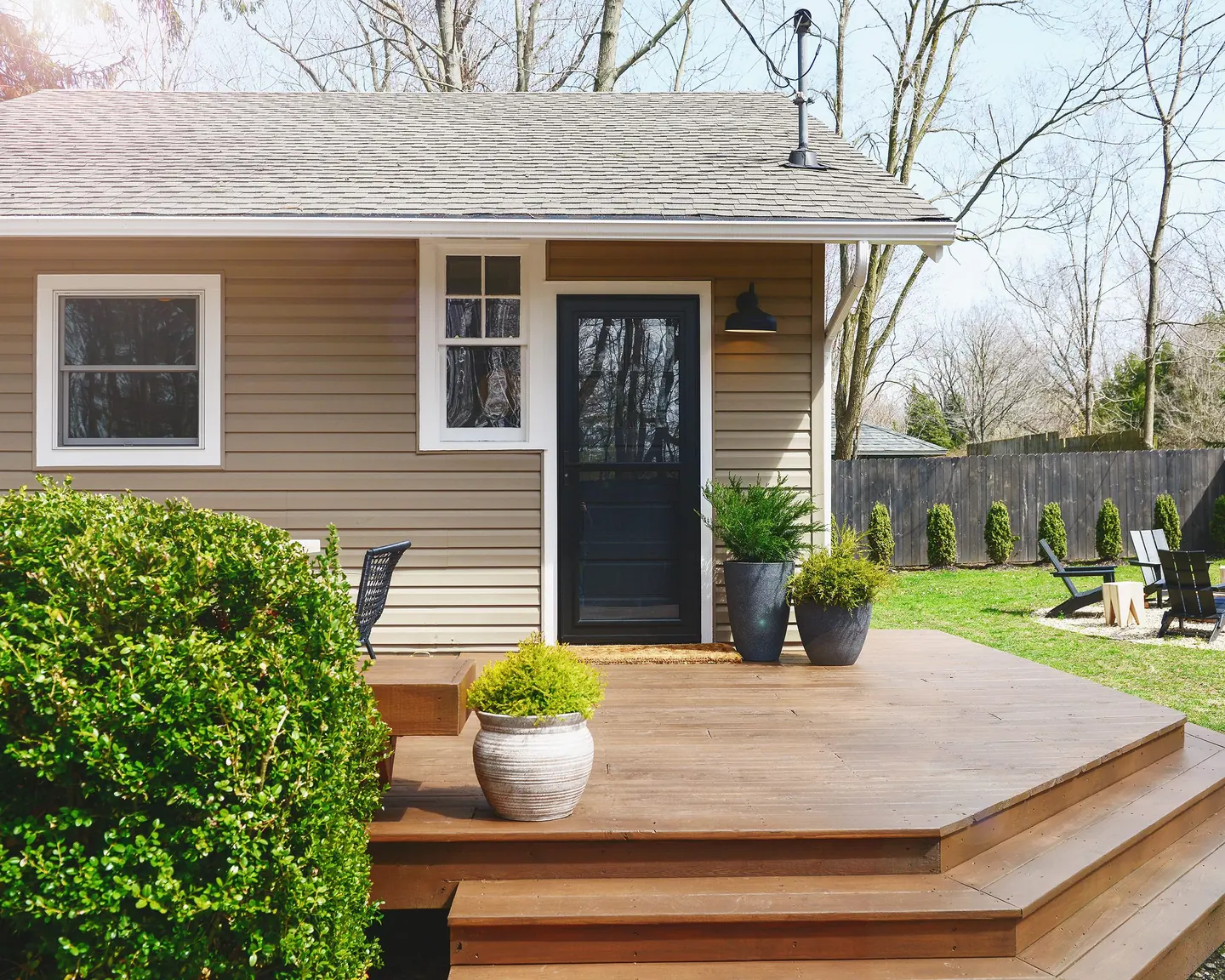
Oil-Based vs Water-Based Stain: Which Is Better for Fences and Decks?
For a fence or deck out in the weather, federal lab research leans toward oil-based stain. A 1999 USDA Forest Products Laboratory report calls oil-based semi-transparent stain the finish of choice for fully exposed wood. Since it forms no film, it cannot peel. Water-based latex semi-transparent stain leaves a thin film that tends to flake, the 1999 report says.
The 1999 report says water-borne stains that penetrate wood were still being developed. Those had been only moderately successful at matching oil-based stains. The lab’s 2013 deck finish guide says water-borne formulas have become popular. But it says wood is very resistant to water-borne penetration, and those formulas are more likely to form a film.
This guide covers outdoor wood only, meaning fences and decks, and leaves indoor floors and furniture aside. Our deck staining and fence staining work starts with a wash and a full dry-out.
What is the difference between oil-based and water-based stain?
The base is the liquid that carries the color. A national home-services guide says oil-based stain uses petroleum-based solvents that carry pigment and binders deep into the wood’s grain. Water-based stain uses water instead, and the guide says it sits closer to the surface.
Latex semi-transparent stain can look like the oil-based kind, the 1999 report says. But the latex does not soak in the way oil does. The see-through look comes from a thin film.
Until about 1980, the 1999 report says, all penetrating stains were oil-based. Then makers began changing formulas, because many solvents react with air pollutants to form ozone. Ozone is a part of smog, and those solvents are volatile organic compounds, or VOCs.
Base is one choice. How see-through the stain looks is another, covered in our guide to solid vs semi-transparent stain.
How do oil-based and water-based stains compare?
| Oil-based stain | Water-based stain | |
|---|---|---|
| Penetration | Soaks in and forms no coating (1999 report) | Wood is very resistant to water-borne penetration (2013 guide) |
| How it wears | Forms no film, so it cannot peel (1999 report) | A thin latex film tends to flake (1999 report) |
| Dry time | Several hours, up to a full day | Within an hour or two |
| Working time | Longer, with fewer visible lap marks | Shorter, with more chance of lap marks |
| Cleanup | Mineral spirits or paint thinner | Soap and water |
| Odor and VOCs | Strong odor, higher VOC levels | Low odor, lower VOC levels |
| Price per gallon | $35 to $120, with fewer coats needed | $20 to $90, may need more coats |
| Next coat | Wood needs no scraping first (1999 report) | Must go on a sound surface (1999 report) |
The rows without a lab label come from a national home-services guide. Its per-gallon prices are market numbers for the product, not our price list.
Why does the 1999 lab report favor oil-based stain outdoors?
It comes down to water. The 1999 report says oil-based penetrating stain repels liquid water but lets the wood breathe. The wood dries faster after wet or humid weather. Even in excessive moisture, it says, these stains do not blister and peel.
Water-based latex stain fares worse in the open. The 1999 report says its thin film is not thick enough to be durable. It says use of latex semi-transparent stain should be limited to places relatively protected from the weather, such as siding.
The lab’s 2013 deck finish guide recommends penetrating finishes for wood decks. It says a penetrating finish performs better overall and is easier to reapply than a film-forming finish.
What do water-based stains do better?
A national home-services guide lists real perks for water-based stain. It dries fast and cleans up with soap and water. The guide also calls it easier to touch up and reapply, especially indoors. It keeps its color well without yellowing, while some oil-based finishes may yellow slightly or darken.
Formulas vary, too. The 1999 report says low-VOC formulas, water-borne ones among them, vary considerably in how they penetrate. Many soak in like traditional oil-based stains, but others tend to form a film.
What does San Antonio heat mean for oil-based and water-based stain?
San Antonio averages 122 days a year at 90 degrees or hotter, per NOAA climate normals. Eighteen of those days, on average, reach 100 or more. In that heat, dry time matters.
Fast drying cuts both ways, a national home-services guide says. Water-based stain leaves less time to work, which raises the chance of lap marks. Oil-based stain allows a longer working time, with fewer visible lap marks. The 1999 report adds that some oil-based semi-transparent stains need a day of good drying weather.
Lap marks are bands where two coats overlap, the lab’s 2013 guide explains. The 1999 report says they come from staining over a dry or partly dry area beside the wet one.
Summer heat is also ozone weather. The 1999 report says ozone peaks in the late afternoon of warm, sunny summer days. For finishes made with VOC solvents, it advises skipping days with an ozone alert. In 2024, the EPA moved Bexar County from moderate to serious ozone nonattainment, per the Texas Commission on Environmental Quality.
Can you stain a new pressure-treated pine or cedar fence right away?
It depends on what the boards came with. The lab’s 2013 deck finish guide says deck lumber is usually pressure treated with a preservative. Otherwise, it is a naturally durable wood such as redwood or western redcedar.
The 2013 guide writes its waiting rule for decking, and the rule has one condition: a water repellent. If the boards got a factory-applied water repellent, or a recent water-repellent finish, a semi-transparent stain may not absorb properly. In that case, the guide says to let the wood weather 2 to 3 months before finishing.
The 1999 report says oil-based semi-transparent stain can be used on new or weathered wood. Waiting too long has a cost. The 2013 guide says up to a year opens the wood further, but significant checking, or cracking, can set in.
The same guide says most decks are retired because of cracks and checks that timely finishing could mostly have prevented. If your fence or deck is new, mention it when you book the free estimate.
Can you switch from water-based to oil-based stain?
It depends on whether the old stain left a film. The 1999 report counts latex semi-transparent stain among film-forming finishes. It says oil-based penetrating stain cannot go over a film-forming finish unless that finish is completely removed.
Staying with water-based stain has its own rule. The 1999 report says latex stain must go on a sound surface. Recoating before it flakes builds a thicker, more durable film, the 1999 report says, though it hides more wood.
Oil-based penetrating stain is easily maintained, the 1999 report says, since the wood needs no scraping before refinishing. If you are not sure what is on your fence or deck now, the free estimate covers it.
Which stain base fits your fence or deck?
The lab’s view and the convenience pull in different directions. The 1999 report picks oil-based stain for fully exposed wood, while water-based stain wins on dry time and cleanup.
We are based in San Antonio and work across the San Antonio to Austin corridor. We stain cedar and pine fences and decks, including pressure-treated pine. Each job starts with deck and fence cleaning, then a full dry-out before the stain.
The free estimate for our deck staining service covers which base fits your wood. Financing is available on larger projects. For market prices, see our deck staining cost guide. Call or text (512) 905-8038 to set up a visit.